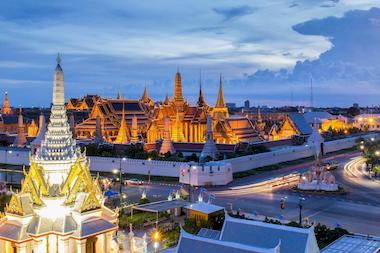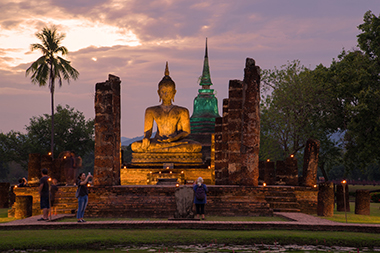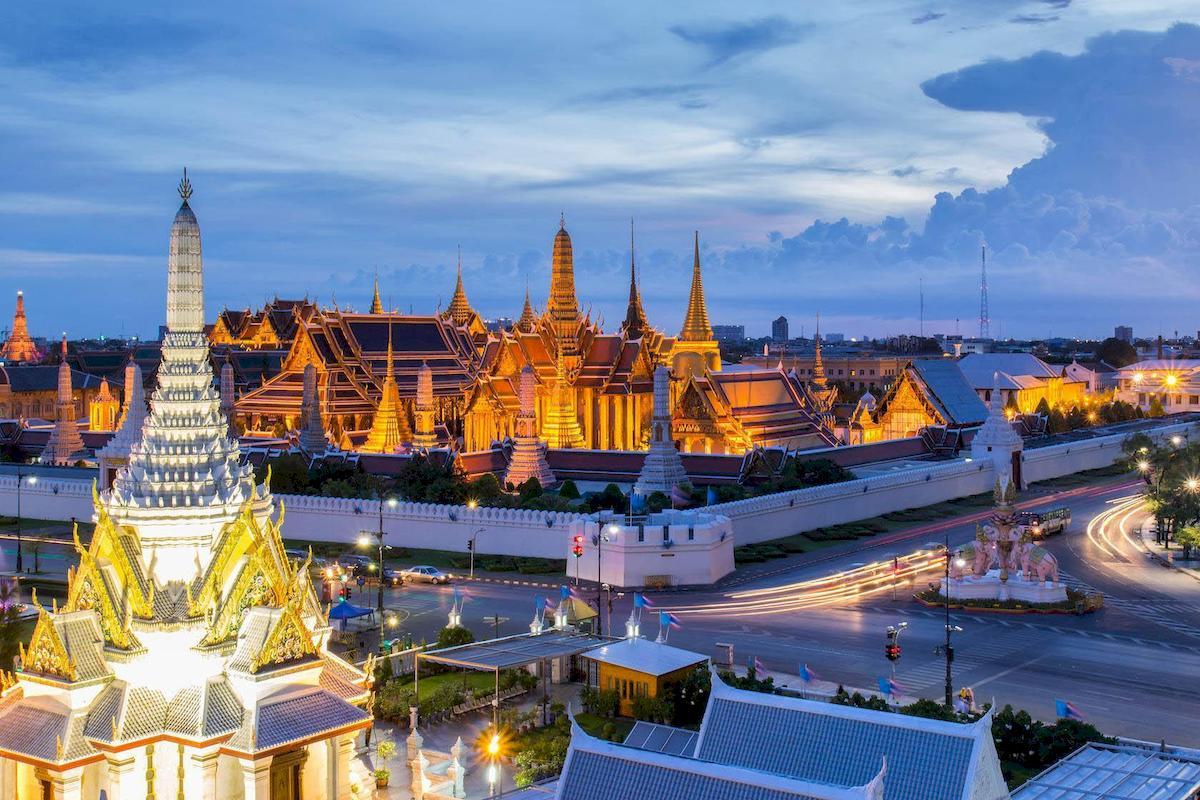
Bangkok is Thailand’s vibrant and lively capital, where centuries-old temples stand alongside glittering skyscrapers and bustling street markets. Nicknamed the "City of Angels," it offers a rich mix of culture, gastronomy, and contrasts: royal palaces, colorful tuk-tuks, peaceful riverside temples, and world-famous street food coexist in an electrifying atmosphere. Whether you seek luxury or authenticity, tradition or nightlife, Bangkok is a city that never stops surprising you.
Bangkok, Thailand’s bustling capital, has a rich and fascinating history that goes back several centuries. Known in Thai as "Krung Thep Maha Nakhon," meaning "City of Angels," Bangkok evolved from a small riverside village into one of Southeast Asia’s most dynamic and influential cities.
The first mention of Bangkok dates back to the 15th century, when it served as a small trading post under the Ayutthaya Kingdom. Located on the western bank of the Chao Phraya River, the village was ideally positioned to support maritime trade between China, India, and the rest of the region. Merchants stopped in Bangkok to trade goods, rest, and resupply before continuing their journey.
As trade expanded, Bangkok’s importance grew. By the late Ayutthaya period in the 17th century, the area gained strategic significance. The Siamese monarchy recognized its importance and built forts and defensive walls along the river to protect against foreign invaders and pirate attacks. The settlement became a frontline defense point, especially against European colonial interests.
In 1767, the ancient capital of Ayutthaya was sacked by Burmese forces, plunging Siam into chaos. General Taksin emerged as a national hero by rallying forces and reclaiming lost territories. He established a new capital at Thonburi, just across the river from present-day Bangkok. Thonburi briefly served as the capital until Taksin was overthrown in 1782.
After General Taksin’s fall, General Chao Phraya Chakri ascended the throne as King Rama I, founding the Chakri dynasty that still reigns today. One of his first acts was to move the capital from Thonburi to the opposite bank of the Chao Phraya River. He named it "Krung Thep," an abbreviation of its full ceremonial name—the longest city name in the world.
King Rama I founded the Grand Palace and Wat Phra Kaew (Temple of the Emerald Buddha), establishing Bangkok as Thailand’s spiritual, cultural, and administrative center. The city, lined with canals and fortresses, earned the nickname "Venice of the East" from early European visitors.
During the reigns of Kings Rama IV (Mongkut) and Rama V (Chulalongkorn), Bangkok underwent major modernization. The monarchy adopted Western technologies and administrative reforms to avoid colonization, unlike many neighboring countries. Roads were built, printing presses were introduced, and modern education was promoted. In 1863, the first paved road, Charoen Krung Road, was built, linking the city’s main districts.
King Chulalongkorn played a key role in transforming Bangkok into a modern city with railways, electricity, and improved infrastructure. He also established diplomatic relations with Western nations, helping Thailand maintain its sovereignty during a period of aggressive colonial expansion in Asia.
Bangkok continued its rapid expansion throughout the 20th century. It became the center of national politics, education, and commerce. After the 1932 revolution, which transformed Thailand from an absolute monarchy into a constitutional monarchy, Bangkok experienced rapid urbanization. Highways replaced canals, skyscrapers replaced traditional wooden houses, and Western cultural influences grew stronger.
Throughout the mid-20th century, the city also experienced political unrest, student protests, and coups, shaping the democratic institutions of today. Despite political instability, Bangkok remained a cultural and economic powerhouse.
From the 1980s to the late 1990s, Bangkok experienced unprecedented economic growth. Thailand became one of the "Asian Tigers," and the capital saw a construction boom. Modern office towers, luxury hotels, and shopping malls transformed the skyline. Infrastructure such as the BTS Skytrain and the MRT subway were introduced to cope with population growth and traffic congestion.
During this period, Bangkok became a hub for international tourism, trade, and finance, attracting millions of visitors each year. The blend of modern amenities and cultural heritage made it one of the world’s top travel destinations.
Today, Bangkok is a megacity of more than 10 million people. It continues to evolve while preserving its historic monuments and traditions. The city hosts international events, art festivals, and global conferences, strengthening its role on the world stage.
From the ornate spires of the Grand Palace to the lively night markets and modern rooftop bars, Bangkok offers a dynamic experience that reflects both its rich past and its ambitions for the future. Whether you are passionate about history, cuisine, spirituality, or contemporary urban life, Bangkok offers a story that is constantly unfolding.
Bangkok’s history is not only a story of kings and conquests, but also of resilience, adaptation, and innovation. Today, Bangkok is not only the capital of Thailand, but also a symbol of Southeast Asia’s ability to embrace change while respecting tradition.
by city