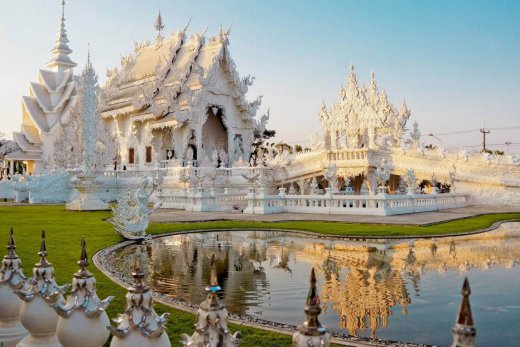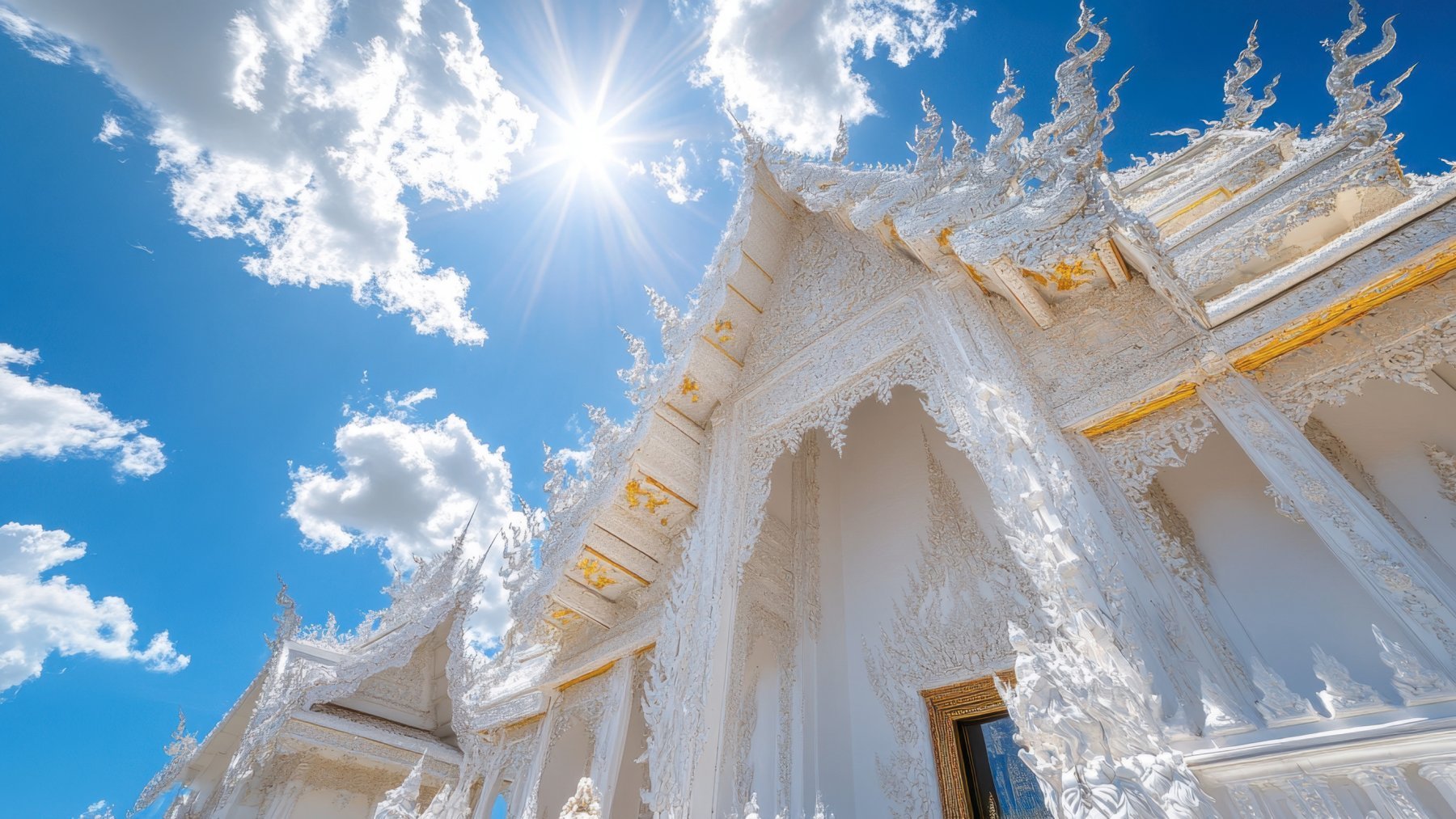
The White Temple in Chiang Rai—locally known as Wat Rong Khun—is one of the most extraordinary and visually striking temples in Thailand. This iconic landmark is a must-visit destination when traveling in Northern Thailand. While many visitors are captivated by its dazzling white exterior, few fully understand the rich symbolism and artistic vision behind its creation.
The White Color Symbolizes the Purity of Buddha
Unlike most temples in Thailand, which are traditionally decorated with gold accents, the creator of the White Temple intentionally chose white as the dominant color. Rather than serving as a simple decorative detail, the brilliant white covers every part of the complex—from rooftops and bridges to fences and statues.
This choice symbolizes the purity and wisdom of Buddha. The shimmering white surface also reflects light beautifully, creating an almost ethereal appearance that enhances the temple’s spiritual atmosphere.
The Restroom Building Is Surprisingly One of the Most Beautiful
One unexpected highlight for visitors is the restroom building, which is often considered one of the most ornate restroom structures in Thailand. In contrast to the white temple buildings, this structure is richly decorated in gold.
The gold color represents worldly wealth and material desires, creating a deliberate symbolic contrast with the spiritual purity represented by the white temple itself.
The White Temple Is Still Under Construction
Construction of Wat Rong Khun began in 1997, yet the project remains ongoing. The surrounding buildings and gardens continue to evolve, with new additions and artistic details regularly introduced.
The temple complex includes several structures, and it is estimated that the full project may take decades to complete. Future generations are expected to continue the artist’s work, ensuring that the temple remains a living masterpiece.
Designed and Funded by a Single Artist
The remarkable architecture of the White Temple was designed by renowned Thai artist Chalermchai Kositpipat, who was born in Chiang Rai. He financed the project primarily with proceeds from the sale of his artwork.
His dedication to this ambitious project reflects a lifelong commitment to Buddhist art and spiritual expression, transforming Wat Rong Khun into both a sacred site and an internationally recognized work of art.
Almost Every Detail Has Religious Symbolism
Nearly every structural detail of the White Temple carries deep symbolic meaning. Mythical creatures, guardian statues, and decorative elements represent key teachings of Buddhism.
The overall theme of the temple illustrates the human journey from greed and desire toward enlightenment, emphasizing moral discipline and spiritual growth.
The Temple Features a Three-Tiered Roof
The main structure features a distinctive three-tiered roof inspired by traditional Thai Buddhist temple architecture. This layered design is adorned with intricate Naga serpent decorations.
The Naga, a mythical serpent found in Buddhist mythology, is believed to protect sacred places. The detailed roofline creates a dramatic and memorable silhouette visible from afar.
Interior Murals Feature Superheroes and Pop Culture Icons
Inside the main temple building, visitors encounter a striking artistic contrast. Traditional Buddhist imagery appears alongside modern cultural references, including superheroes and internationally recognized figures.
These murals depict scenes influenced by contemporary culture and historical events, symbolizing modern challenges and distractions that humanity must overcome in the pursuit of enlightenment.
Visiting the White Temple (Wat Rong Khun)
The White Temple is open daily from 6:30 AM to 6:00 PM, making it easy to include in most travel itineraries. Visitors should allow at least one hour to explore the temple grounds and admire the various structures.
If you are staying in Chiang Mai rather than Chiang Rai, consider booking a full-day excursion that includes the White Temple and the famous Golden Triangle, allowing you to experience several of Northern Thailand’s highlights in a single trip.