Chiang Rai White Temple: Complete Guide to Wat Rong Khun
Among the most extraordinary attractions in northern Thailand, the White Temple of Chiang Rai, officially known as Wat Rong Khun, is impossible to ignore. With its dazzling white exterior, intricate sculptures and unconventional works of art, it looks unlike almost any other Buddhist temple in Thailand.
Wat Rong Khun combines Buddhist symbolism, contemporary art and modern popular culture in a project created by Thai artist Chalermchai Kositpipat. What may initially appear to be a beautiful white temple is actually a complex artistic journey filled with references to desire, suffering, wisdom and enlightenment.
Whether you are interested in Thai culture, Buddhism, architecture, photography or contemporary art, the White Temple is one of the most memorable places to visit in Chiang Rai.
What Is the White Temple in Chiang Rai?
Wat Rong Khun is a contemporary Buddhist temple and art complex located south of Chiang Rai in northern Thailand.
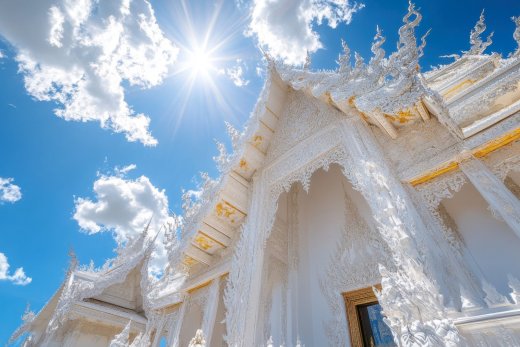
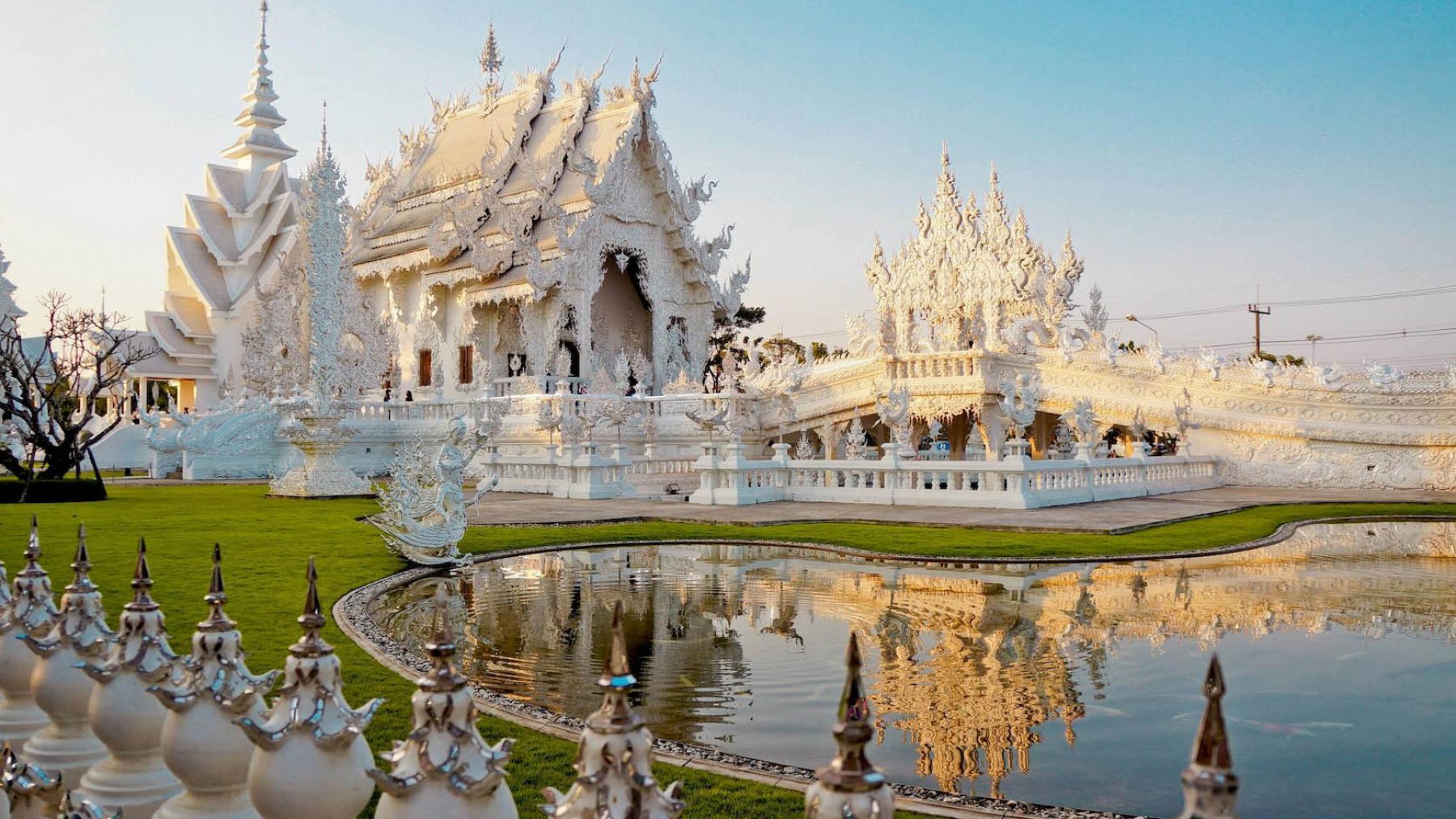
Unlike Thailand's historic temples, some of which are several centuries old, the White Temple is a modern artistic project. Its appearance is immediately recognizable: elaborate white structures covered with reflective glass details that sparkle in the sunlight.
The color white is not simply decorative. It forms an important part of the spiritual symbolism that runs throughout the complex.
The Story Behind Wat Rong Khun
The modern White Temple is closely associated with Chalermchai Kositpipat, a Thai artist born in Chiang Rai in 1955.
After studying at Silpakorn University in Bangkok and developing a successful artistic career, Chalermchai turned his attention to Wat Rong Khun, an older temple that had fallen into poor condition.
In 1997, he began transforming the site according to his own artistic vision. Rather than simply restoring the existing temple, he set out to create an ambitious work combining Buddhist teachings with contemporary art.
For Chalermchai, Wat Rong Khun was conceived not only as a religious building but also as a living work of art and a spiritual message.
One remarkable aspect of the project is the artist's determination to maintain creative independence. Chalermchai invested heavily in the temple himself, allowing him to retain artistic control over its development.
A Temple That Continues to Evolve
Wat Rong Khun should not be thought of as a finished monument. The complex has continued to evolve since the modern project began.
Chalermchai and his team have progressively added buildings, sculptures and artistic elements, turning the site into an expanding art and religious complex.
The long-term vision has included multiple structures such as the main temple, meditation areas, an art gallery, stupas and facilities associated with religious life.
This continuing evolution is one reason returning visitors may notice changes to the complex over time.
Symbolism and Architecture of the White Temple
Almost every major element of Wat Rong Khun carries symbolic meaning. The architecture is designed to encourage visitors to think about human desire, suffering, morality and the Buddhist path toward enlightenment.
The temple's brilliant white appearance represents the purity of the Buddha, while the pieces of reflective glass incorporated into the decoration evoke wisdom and spiritual illumination.
The Bridge of Rebirth
One of the most famous parts of the White Temple is the bridge leading toward the main building.
Before reaching it, visitors encounter a dramatic sea of sculpted hands reaching upward. The imagery represents human desire, attachment and suffering.
Crossing the bridge symbolically represents leaving worldly temptations behind and progressing toward a state of greater spiritual awareness.
This contrast between disturbing imagery and the beautiful white temple ahead is intentional. The journey is as important as the building itself.
The White Ubosot
The Ubosot, or ordination hall, is the centerpiece of Wat Rong Khun. Its elaborate white façade is decorated with countless reflective details that make the structure shimmer in bright sunlight.
The white exterior symbolizes purity, but the artistic message becomes considerably more complex inside.
Murals combine traditional Buddhist imagery with unexpected references to contemporary society and popular culture. Characters and images associated with superheroes, science fiction, cartoons, global conflict and modern consumer culture appear alongside spiritual imagery.
These references are not included simply for entertainment. They illustrate a world filled with distraction, violence, materialism and temptation, contrasting modern human behavior with the Buddhist search for wisdom and inner peace.
From Hell to Enlightenment
The progression through Wat Rong Khun can be interpreted as a symbolic spiritual journey.
The visitor begins among images representing desire and suffering, crosses the Bridge of Rebirth and approaches the brilliant white Ubosot.
The architecture therefore transforms the physical act of entering the temple into a metaphor for moving away from worldly attachment and toward enlightenment.
Why Is Wat Rong Khun White?
The distinctive white color is one of the most common questions visitors have about Wat Rong Khun.
While gold is frequently associated with Thai Buddhist temples, Chalermchai chose white to represent the purity of the Buddha.
Small mirrored elements incorporated into the architecture reflect sunlight and create the temple's sparkling appearance. Symbolically, these reflections are associated with the Buddha's wisdom shining across the world.
This combination of white surfaces and mirrors gives Wat Rong Khun its unmistakable appearance and reinforces the spiritual concepts behind the design.
Contemporary Art Meets Buddhism
One of the most fascinating aspects of Wat Rong Khun is its combination of traditional Buddhist ideas with contemporary imagery.
Visitors may encounter artistic references to superheroes, fictional characters, technology, warfare and other elements of modern culture.
At first, these images can seem surprising inside a religious complex. However, they form part of Chalermchai's wider artistic message.
Modern society creates new forms of desire, ego, violence and material attachment. By incorporating recognizable contemporary symbols into Buddhist imagery, the artist connects ancient spiritual questions with the world experienced by visitors today.
This makes the White Temple both a Buddhist site and an ambitious work of contemporary Thai art.
Other Buildings to See at Wat Rong Khun
The famous white Ubosot receives most of the attention, but the wider Wat Rong Khun complex contains several other structures and artistic details worth exploring.
The Golden Building
One of the most striking contrasts is a richly decorated golden building.
Its color deliberately contrasts with the purity represented by the white temple. Within the artistic symbolism of the complex, gold is associated with the physical world, material desire and attachment.
This contrast reinforces one of the central themes of Wat Rong Khun: the difference between material temptation and spiritual development.
The Art Gallery
The complex also includes an art gallery where visitors can discover more of Chalermchai Kositpipat's work.
For anyone interested in understanding the artist behind Wat Rong Khun, spending time in the gallery adds useful context to the symbolism and visual language seen throughout the temple complex.
Gardens and Sculptures
Do not rush directly to the main temple and leave. The grounds contain numerous unusual sculptures and decorative details.
Mythological creatures, demons and unexpected contemporary references appear throughout the complex, rewarding visitors who take the time to look carefully.
The 2014 Chiang Rai Earthquake
In 2014, a powerful earthquake in northern Thailand damaged Wat Rong Khun.
The damage initially raised concerns about the future of the project. Chalermchai reportedly considered abandoning further work before deciding to continue restoring and developing his creation.
The event became another important chapter in the history of a temple that was already conceived as an evolving lifetime project.
Practical Information for Visiting the White Temple
Wat Rong Khun is located approximately 13 kilometers south of central Chiang Rai, making it relatively easy to visit from the city.
- Location: south of Chiang Rai, northern Thailand
- Travel time: approximately 20 minutes from central Chiang Rai, depending on traffic
- Recommended visit duration: allow around 1 to 2 hours to explore without rushing
- Clothing: wear respectful clothing suitable for visiting a Buddhist religious site
- Best time: arriving earlier can help you avoid some of the busiest periods
Opening hours and admission fees can change, so it is advisable to check current information before your visit rather than relying on older prices or schedules.
How to Get to the White Temple
Wat Rong Khun can be visited independently from Chiang Rai or as part of an organized excursion.
From Chiang Rai
From central Chiang Rai, travelers can reach the White Temple using local transportation, taxi services or private transport. Local buses can also be an economical option.
If you are staying in Chiang Rai, visiting independently gives you more control over how much time you spend exploring the complex.
From Chiang Mai
The White Temple is also one of the most popular stops on day trips from Chiang Mai to Chiang Rai.
These excursions often combine several of the region's major attractions, making them convenient for travelers with limited time.
What to Wear at Wat Rong Khun
Although the White Temple is famous internationally as an artistic attraction, it remains a religious site.
Visitors should dress respectfully. Clothing that covers the shoulders and knees is the safest choice when visiting Buddhist temples in Thailand.
Respect signs and instructions within the complex, avoid disturbing worshippers and remember that impressive photographs should never come at the expense of appropriate behavior at a religious site.
Best Time to Visit the White Temple
The White Temple can be visited throughout the year, but the experience varies according to the season, weather and time of day.
Morning visits are particularly attractive for photography because the sunlight catches the temple's mirrored decorations. Arriving earlier may also provide a more comfortable experience before larger tour groups arrive.
During Thailand's hotter months, visiting in the morning can also make walking around the complex more pleasant.
Why Visit the White Temple?
Wat Rong Khun deserves its reputation as one of Chiang Rai's essential attractions because it offers much more than an impressive photo opportunity.
- Its architecture is unlike that of traditional Thai temples.
- Its design tells a symbolic story about suffering, desire and enlightenment.
- It introduces visitors to the work of Chalermchai Kositpipat.
- It combines Buddhist philosophy with contemporary art and popular culture.
- It is easy to combine with other major Chiang Rai attractions.
Even travelers who have already visited many temples in Thailand are likely to find Wat Rong Khun surprisingly different.
What to Visit Near the White Temple
Chiang Rai has several remarkable cultural attractions that complement a visit to Wat Rong Khun.
Blue Temple – Wat Rong Suea Ten
The Blue Temple, or Wat Rong Suea Ten, is another spectacular contemporary temple in Chiang Rai. Its intense blue interior and elaborate decoration provide a striking contrast with the brilliant white architecture of Wat Rong Khun.
Baan Dam Museum – The Black House
The Baan Dam Museum, commonly known as the Black House, is associated with renowned Thai artist Thawan Duchanee.
Its dark architecture and unusual art collection create another fascinating contrast with the White Temple and help demonstrate the creativity of Chiang Rai's contemporary art scene.
The Golden Triangle
Travelers with a full day available can continue farther north toward the Golden Triangle, the historic region where Thailand, Laos and Myanmar meet around the Mekong River.
Combining these destinations makes it possible to experience temples, contemporary Thai art, landscapes and regional history in a single Chiang Rai itinerary.
Is the Chiang Rai White Temple Worth Visiting?
Yes, Wat Rong Khun is absolutely worth visiting, particularly if this is your first trip to Chiang Rai.
Its appeal goes far beyond its famous white façade. Understanding the symbolism behind the hands, bridge, mirrors, murals and contrasting buildings transforms the visit from a simple sightseeing stop into a much more interesting cultural experience.
Wat Rong Khun represents the personal vision of an artist who deliberately challenged traditional expectations while using art to communicate ideas about desire, suffering, wisdom and spiritual awakening.
Whether you are interested in Buddhist culture, contemporary art, architecture or simply want to see one of northern Thailand's most distinctive landmarks, the White Temple deserves a place on your Chiang Rai itinerary.